
UPCOMING COURSES
Spring 2021 Online
Explore medieval notation, melodic improvisation and ornamentation, and singing and musical instruments within specific contexts, repertoires and music sources.
Starts March 1, 2021
Medieval Music Notation

Modal Notation
Explore modal notation, the key to the music of the School of Notre Dame, through the study of treaties, musical sources, and genres that record the practice, and learn to transcribe it, sight read it, and perform directly from original sources.

Franconian Notation
Learn to read Franconian notation directly from the original sources following the instructions given by Franco of Cologne and other medieval writers. This opens the door to monophonic and polyphonic repertoires of the 13th and 14th centuries.
Repertoire & Performance

Melodic Improvisation (Vocal and Instrumental)
Learn how to improvise vocal and instrumental preludes, interludes, postludes, and full melodies following medieval musical and rhetorical compositional techniques, melodic modal practice, and performance conventions.

Melodic Ornamentation
Learn how to ornament a medieval vocal or instrumental melody utilizing pitch inflection, repercussive and tremulous sounds, passing and neighboring tones, and pitch and melodic substitution and transposition as it is indicated in medieval music sources.
Voice & Musical Instruments in Context
These courses will help you develop a historically-informed vocal or instrumental playing technique, realise and use appropriate medieval performance conventions, and build a relevant performance repertoire.
Medieval Singing

The Vocal Art of the Monophonic Conductus at the Peak of the Notre Dame Phenomenon
Study Philippe le Chancelier’s songs while developing an advanced vocal technique and acquiring practical tools for the understanding and performance of any medieval song repertoire.
Vielle

The Vielle and Jerome of Moravia
Strengthen your vielle technique while studying the tunings, repertoires, and performance practice precepts (ornamentation, phrasing, rhythm) given by Jerome of Moravia in his Tractatus de music (c. 1280).
Harp

The Harp and Anglo-Norman Repertoire
Develop a varied playing style on the medieval harp while exploring the fascinating sounds of the Anglo-Norman repertoire.
Citole/Gittern/Psaltery

The Citole/Gittern/Psaltery and the Clerical Music Repertoire
Strengthen your citole or psaltery technique and performance practice while exploring a collection of clerical compositions (Latin songs and instrumental pieces) associated to those instruments in medieval literature and art.
Portative Organ

Discovering the Portative Organ (Beginner)
Learn the basics of portative organ technique and performance practice while immersing yourself in the world of medieval music and its repertoires.
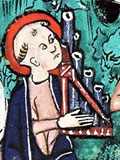
Organ Performance Practice in the Medieval Clerical Universe (Advanced)
Build up your organ and portative organ performance practice technique while studying the repertoires that are most linked to the use of the organ and the portative organ in the Medieval clerical world.
Bagpipe/Pipe & Tabor

Bagpipe/Pipe & Tabor: Instrumental Dances for Wind Instruments
Advance your bagpipe (musa) or Pipe and Tabor playing technique while reconstructing a collection of pieces for these instruments based on the pastourelle, dance song, and instrumental music repertoires connected to them in medieval sources.
Frame Drums & Percussion

Frame Drums and Percussion (Beginner)
Learn to play round and square frame drums in medieval style by studying strokes and techniques recorded in medieval sources. You will also discover how to apply medieval rhythmic modes and their ornamentation to the accompany of vocal and instrumental pieces.
Enroll Now
Places are limited for each section, so sign up early.
What Our Students Say
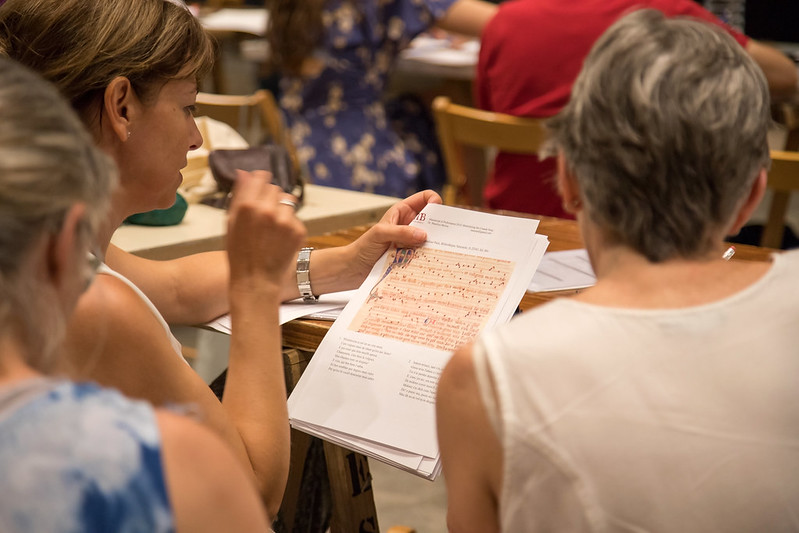
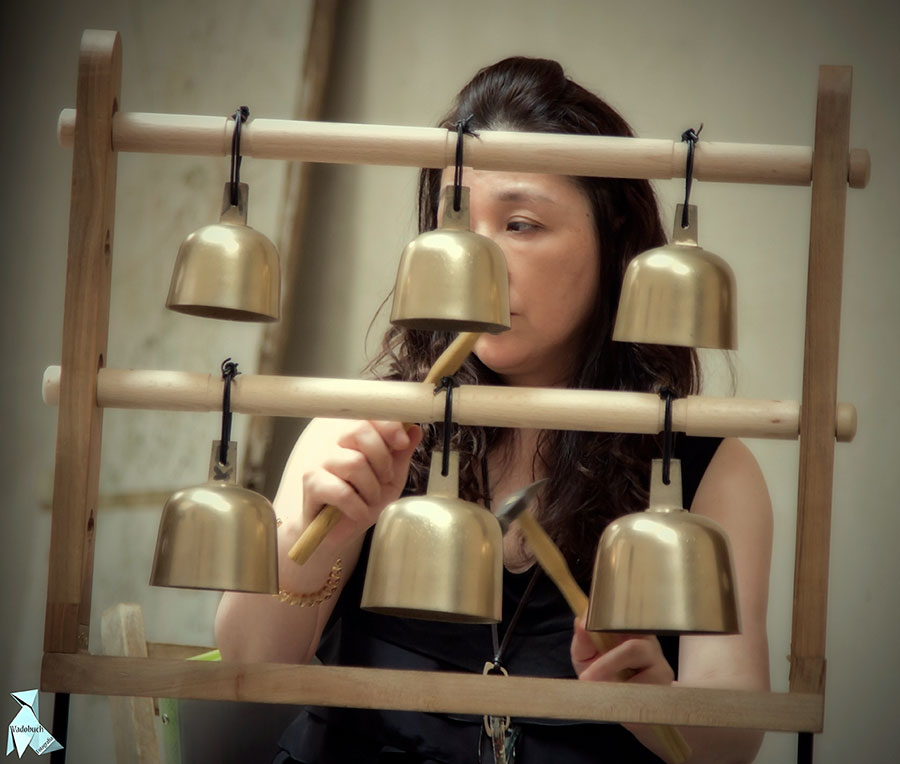


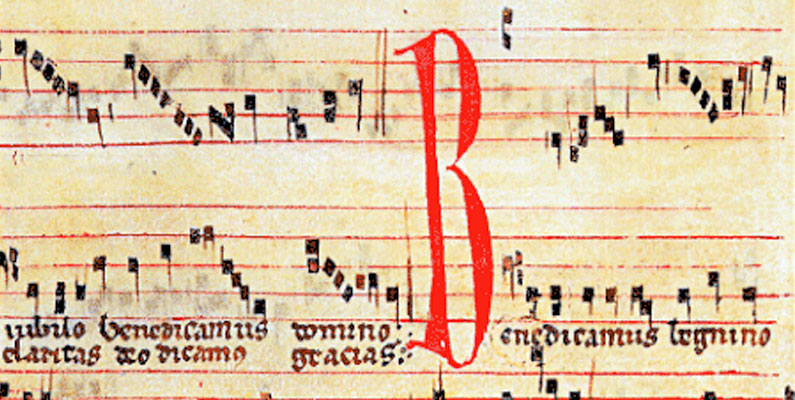

The Medieval Music Besalú offers singers and instrumentalists the opportunity to study monophonic and polyphonic music composed between the 11th and 13th centuries.
Can I take courses for university credit without enrolling in the full specialist certificate program?
Yes, courses can be taken for credit individually without having to enroll in the full certificate program. You can transfer the credits later on should you decide to enter the full specialist certificate program.
How many credits do I have to take in the university specialist certificate program?
For the University Specialist Certificate on the Research and Performance of Medieval Music you will have to take a mixture of required (8 credits) and elective (7.5 credits) courses. Tuition is 3,900€ for the 15.5 credits.
What is the duration of the specialist program?
The certificate has to be completed within our “school year”, a nine-month period that spans between September of every year to June of the following year (example September 2022 – June 2023). For people enrolled in the program, the courses are open throughout this entire period.
Can I take courses for individual credit and then transfer them to the specialist certificate later on?
If you are not sure about enrolling in the program or you require more time, you have the option to take the courses over more than one year. However, you will have to pay the individual course credit fee (non-program). Then when you are ready to go for the specialist certificate, you will have to register in the University Specialist Certificate program. At this point you will pay the prorated program fee for the remainder of the credits you have not taken yet. (For example, if you have taken 10 credits singly, and then decide to go for the certificate, you would pay for 5.5 more credits at the discounted program rate.) Basically, any courses taken for credit through us will be transferable to the 15.5-credit specialist certificate once you enroll in the program.
Is it better to start by just taking some separate credits before joining the Specialist program?
Our recommendation is that students first take individual courses to get a taste of our program and to see the level of demand. This will also help you to figure out what is the best self-pacing for the type of work required. After you have taken some courses, then register to the Specialist program to validate your credits and earn the full degree.
After taking credits and joining the Specialist program, is there any extra work required to earn the degree?
Yes, if you are validating more than 6 credits, the university requires that you also produce some extra work. This work will be discussed between the student and the director of the program and it can be composed of research work or the creation of an essay, a full concert program proposal, or concert program notes on a specific subject.
If I have taken courses for non-credit at MMB in the past, can they be applied to the specialist certificate now?
Courses that we have offered in the past (pre-Spring 2021 only) without credit cannot be validated as credit through the University as per their rules. However, if you have already taken some required classes for non-credit, you can substitute it with another elective class as a one-time exception.
How do I pay for the University Specialist Certification Program or credit courses?
Payment for credit courses or the Specialist Certificate will be conducted directly through the University.
Are there discounts for credit courses if I take more than one?
The tuition package for the specialist certificate already is reduced by 15% compared to if you take the 15 credits individually.
No discounts are available if you take the courses for credit individually (without being enrolled in the program.)
Can I take any course at any time?
No, only a handful of courses are available each semester. Please see the Course Schedule to see which courses are available.
Are the courses easy or difficult?
All courses are university-level courses and require a good amount of work from the student. In case of difficulty, the instructors are available to help participants resolve doubts and complete assignments.
How many single courses should I take in a term?
Due to the amount of work required, we recommend that students take only one course during their first term, and then one-three courses maximum during the following terms (four months terms).
How much knowledge of medieval music is necessary to take a MMB course?
Previous knowledge of medieval music is not necessary. What is required is to possess knowledge of modern music notation and basic music theory.
Do I need to audition to take any of the voice or musical instrument courses?
An audition recording is required to enter the medieval singing courses.
Musical instrument courses do not require audition. However, depending on the case, for these courses an audition recording might be requested in order to place you in the correct level course.
How much work needs to be done in order to successfully complete a course and receive its credit(s)?
In order to successfully complete a course and receive the credit(s), participants must submit all exercises and get them approved by the instructor.
With the support of:


